Debt and Conviction
My dad is one the of hardest working people I know. From his 20s until his retirement in his late 60s, he laboured in the booming grounds, which are worksites located on the waters of the northern Pacific where “sticks” (logged trees) are sorted into “booms” (a float of logs tied together with heavy chains) that can then be tugged to the mill for processing into lumber. Dad came to this line of work through my grandfather, who had left school at the age of 13 and found himself in the forest industry in Vancouver sometime later. Booming entails a 10-13 hour work day in a boat under the hot sun or heavy rain, battling ocean currents, slippery surfaces, and rolling logs that can suddenly pull you down into the cold, murky depths.
I couldn’t tell you what kind of income my grandfather made booming back in the 40s and 50s. It was likely enough to get by, to have food, clothes, shelter, and toys for the kids in East Van. A recent conversation with my dad revealed that my grandmother liked to dress fashionably and decorate the home with nice things. Grandpa was against it. Apparently a lot of their arguments centred around money. In grandpa’s family, you saved. You didn’t buy what you couldn’t afford or waste income on unnecessary things even if you could afford them. Why buy fancy furniture when you still don’t own a home? According to dad, his uncle had milk crates for chairs until he earned enough to buy a house and furnish it. Grandpa preferred to live the same way. Eventually, arguments about spending drove a wedge in the family, but my dad kept a working man’s instinct about money. Debt brought trouble. Saving offered relief and independence from backbreaking labour—and the government.
Dad raised his six girls on a single income, chopped firewood for heating, fixed his car troubles instead of visiting the mechanic, mended things around the house, and avoided expensive habits like smoking and drinking. Other families were having fewer children, buying things on credit, going on holidays to Disneyland, eating out for dinner, and wearing name-brand clothes to name just a few of the free-spending habits developing in society at the time. Dad insisted that raising a half-dozen, free-spirited children in a coastal village was better than all of that. Many, many people begged to differ.
While I haven’t had the conviction of my grandfather’s generation to use milk crates for furniture, or my dad’s conviction to raise a large family in a natural setting in order to learn how to live by one’s own means, I did inherit some measure of conviction against debt accumulation. Working-class youth of my generation were sold the dream of autonomy, not through home ownership and physical labour, but through university degrees and college certificates.
The route of education appealed to me after a series of teenage decisions and family problems had left me feeling abandoned and hopeless. The only person I believed I could count on to better my life and situation was me, which meant having to pay for an education either through loans, scholarships, or hard-earned cash. With an attitude against asking anyone for help, I chose the latter option.
In university, I worked full time and went to my classes on my days off. On those two days, I had scheduled courses from 8:30am to 9:00pm with some study breaks in between, which I used for class readings or assignments. For seven years, I kept this routine, paying for my schooling with my own money and a few small grants that I earned from filling out applications. Sure, it took me longer to achieve a degree and the effort came at a cost to my spiritual and psychological well being, but the ability to walk away debt free in the end was priceless. My life was still in my hands, not the bank’s. Best of all, my voice and opinions were free of obligation. I could say and do what I wanted to do without feeling tied to people or institutions. And if I failed, I would carry the loss on my own without someone having the right to say that I had let them down.
This attitude of independence gave me the confidence to speak against the so-called War on Terror the narratives that were shamelessly spreading without challenge. Perhaps if I had been in debt, I would have relented to the general opinion in the news and society that Muslims were bad and that by killing us, the US was protecting global freedoms. Paying for your own education reveals that dishonesty is rather costly. Why would I spend all that time and effort to educate myself and stay out of debt in the process just to lack conviction and moral accountability? It would be such a miserable waste of every painstaking effort and sacrifice I had made to live better.
Now, with successive generations having gone the route of debt accumulation, a thought keeps plaguing me about Gaza and the lack of conviction demonstrated to stop the massacres and save our human values. To say people don’t care does not seem true of the majority. I think humanity does care, but it is in so much spiritual, psychological, and monetary debt that it has no idea how it will pay the price of freedom for the next generation.
Well, if we’re short on ideas, I say, why not start with milk crates and go from there?
By proposing the least of comforts, I am not glorifying poverty. To do so would be an affront to the generations of family members who’ve worked hard, hoping to achieve a better life and securing it slowly. I’m simply offering an example of some rugged folks who’d rather win the ugly contest than drown themselves in debt. Of course, it’s not a radical or original idea. Millions observe this simple way of life, but we’ve been pushed into the margins of common example by industrial marketing, which touts the message that regular people lack wealth and influence, when in fact, power could not function without raking in our tax dollars and blowing it on war crimes.
These are my shoes. They are ugly and worn. I refuse to buy new ones because I bought them last summer. It seems they should have lasted longer, and if I splurge on some black polish, they probably will.
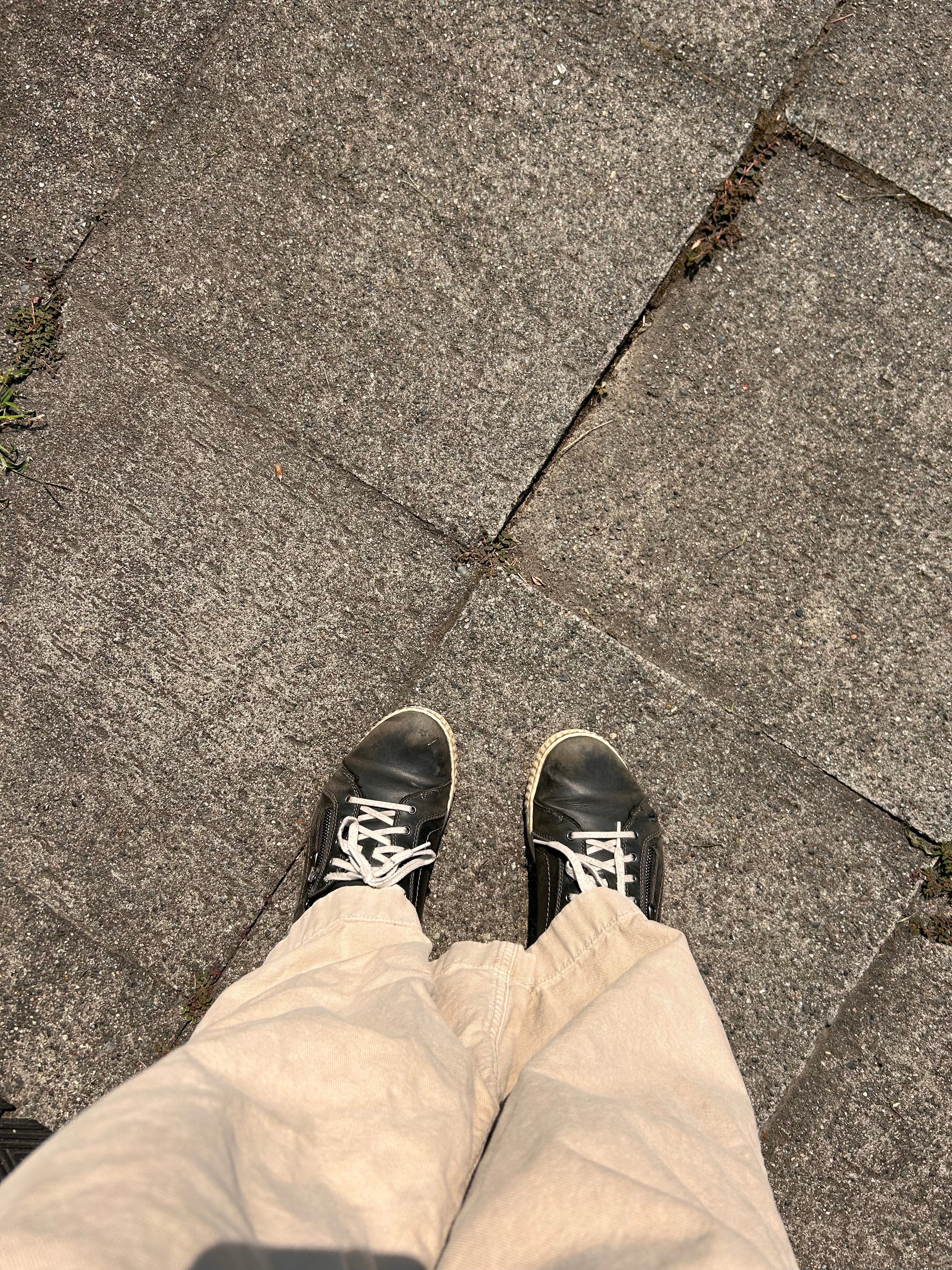
Got anything ugly and worn that you’re refusing to throw away in the interest of pursuing bigger and better dreams?